
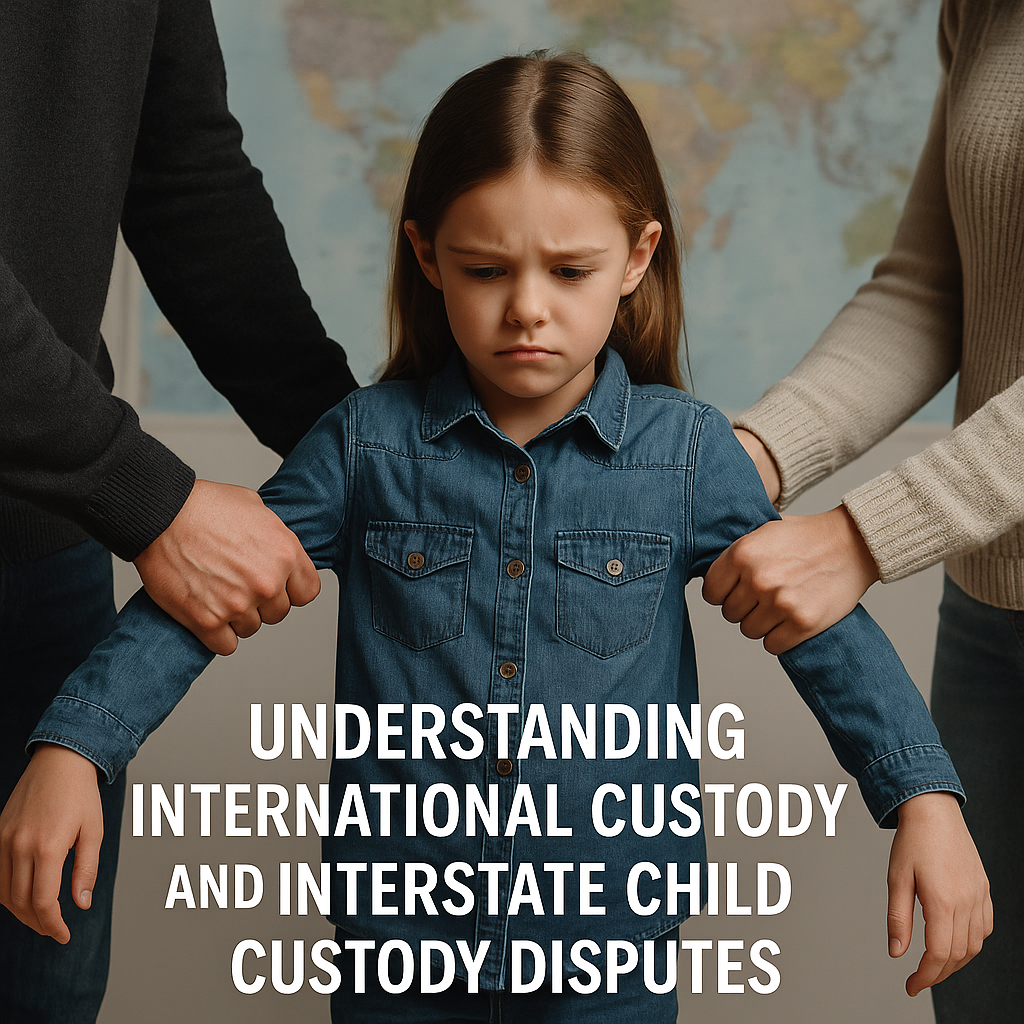
When parents from different states or countries break up, and children are involved, interstate and international custody disputes can become especially complicated. Whether it’s a parent moving with a child to a different state or a different country, it can raise serious legal and emotional challenges if the other parent does not consent to the move, which in Michigan, is sometimes referred to as a move away or a change of domicile case by our Michigan courts.
The two legal terms used when a parent relocates the children without the consent of the other parent or a court order are wrongful removal and wrongful retention of a child. These situations arise with or without a custody order and may be treated as parental kidnapping under Michigan and federal law. There are very few circumstances when a parent can move across state lines or internationally without jumping through the legal requirements.
What Is Wrongful Removal?
Wrongful removal is when a parent takes a child away from their home state or country without the other parent’s consent, which is a violation of the other parent’s custodial rights. In some circumstances, a wrongful removal could be a crime.
What Is Wrongful Retention?
Wrongful retention is when a child travels to a parent’s home located in another state or country for parenting time and is not returned at the agreed-upon or court-ordered time. Just because the parent consented for the child to travel for the initial visit, it does not mean that they consented for the child to remain there. This is especially true when the failure to return the child interferes with custody or parenting time rights ordered by a Michigan family court.
The Legal Tools: UCCJEA and The Hague Convention
UCCJEA in Michigan
The Uniform Child Custody Jurisdiction and Enforcement Act (UCCJEA) is a law adopted by most states, including Michigan, that resolves the issue of which state has jurisdiction to hear custody disputes involving children across state lines. It governs which state has jurisdiction over custody and parenting time orders. Under the UCCJEA, jurisdiction generally goes to the child’s “home state,” where the child has habitually lived for the past six consecutive months. To learn more about our UCCJEA, click here.
The Hague Convention Treaty
For international custody disputes, Michigan courts rely on the Hague Convention Treaty on the Civil Aspects of International Child Abduction. This treaty, ratified by the U.S. and over 100 other countries, provides a process for returning children who have been wrongfully removed or retained in different countries back to their habitual residence. Despite having signed the Hague Treaty, some signatory countries still decline to follow the treaty’s mandates.
Determining Habitual Residence
A child’s habitual residence is a central issue under the Hague Convention Treaty in both wrongful removal and retention cases. Michigan family courts will consider where the child has been living, whether they are settled in that environment, and, in some cases, whether the parents have agreed on a long-term residence. In Michigan, as in other jurisdictions, courts will analyze both the child’s connections to the location and the parents’ intentions. It’s complicated.
Proving Wrongful Removal or Retention
If your child has been wrongfully removed from his or her home state of Michigan to another state or country, a court could order their return if:
- You had custody rights at the time of removal or retention,
- You were exercising those rights (or would have been but for the wrongful act), and
- The removal or retention violated those rights.
Consulting with an experienced family law attorney is strongly recommended, as early legal action is critical in these types of cases. A Hague Convention petition should be filed within one year of the other parent’s failure to return the child to avoid complicating the process. Ideally, court action should commence promptly.
Defenses and Exceptions
If you have been accused of wrongful removal or retention, there are defenses you may be able to assert under the Hague Convention. Some examples are:
- The child is now well-settled in the new location,
- Returning the child poses a grave risk of harm,
- The child objects to returning and is of sufficient age and maturity, or
- The non-abducting parent consented or later acquiesced to the move.
These defenses are fact-specific, and Michigan courts will evaluate them carefully, always with the child’s best interests in mind. Having a best-rated family law attorney can help you gather the necessary information to prove any of these defenses and increase the chance of a positive outcome. There are twists and turns to most all available defenses.
Enforcement and Legal Remedies in Michigan
Once a court finds that a wrongful removal or retention has occurred, it may issue a recovery order. However, enforcing that order, particularly across international lines, can be difficult. Michigan families facing such issues need attorneys experienced in international enforcement and Hague Treaty procedures.
When You Need Help
At The Kronzek Firm, our highly trained family law attorneys are here to guide you through every step. Consulting with a Michigan attorney can save you time and money, though these recovery cases are normally long and expensive. We handle a variety of family law cases, including:
– Divorce
– Legal separation
– Establishing and modifying child support
– Establishing child custody arrangements and modifications
– Relocation of the custodial parent
– Enforcement of court orders
Contact our office main today at 800-576-6035 for a consultation. We are available 24/7 for emergency interventions,
[Disclaimer: This content is for informational purposes only and does not constitute legal advice. Consult an attorney for personalized guidance.]